


Mountain trekking
Mount Meru Adaptive Trek
Walking in Arusha National Park at a distance and gradient set by an individual assessment, not by a brochure grade. Nothing on this journey is described as accessible until the specific route has been walked and measured for you.
About this journey
Walking in Arusha National Park at a distance and gradient set by an individual assessment rather than by a brochure grade. Nothing here is described as accessible until the specific route has been walked and measured for you.
Best months. June to October and January to February. The long rains make the Momella tracks slippery and the walking unpleasant.
Pace. Active, at your level. The assessment sets the distance, not the itinerary.
Who this journey suits
You want to walk rather than drive, and a standard trek grade does not describe you.
You use a mobility aid, or have a condition that makes distance and gradient the whole question.
You would rather be assessed honestly than graded optimistically.
You are in the Arusha area anyway, before or after a safari.
Highlights
- Walking safari with an armed ranger, which the larger northern parks mostly do not permit
- The Momella Lakes, with flamingo and waterbuck, on relatively level ground
- Giraffe, colobus monkey and buffalo at walking pace rather than through a window
- Mount Meru’s forest, without any obligation to climb it
- An individual assessment on day one that sets everything after it
Route
| Stop | Nights | Why |
|---|---|---|
| Arusha | 1 night | Arrive, and the assessment. |
| Arusha National Park | 2 nights | Inside or at the gate, so the walking starts early. |
How the journey flows
Every point below is a real place at its real coordinates. The coastline is simplified — this is a route diagram, not a survey map.
- Private 4×4
- On foot
Boundaries and protected areas are OpenStreetMap data, stored with this site. The dashed line is the order of the route, not the road taken.
In order
- Kilimanjaro Airport (JRO)Arrive
- ArushaPrivate 4×4
- Arusha National ParkPrivate 4×4
- Momella LakesOn foot
Day by day
A starting point. Every day here can be moved, shortened or removed — open one to read what it holds.
-
Day1 Arrive and be assessed WhereArusha OvernightLodge near the park Meals D
Met at Kilimanjaro, about an hour to the lodge. The assessment is the point of today: an hour with the guide and, where it helps, a short walk on known ground, to establish what distance and what gradient actually work. The next two days are written after it, not before.
Where you would sleep this night
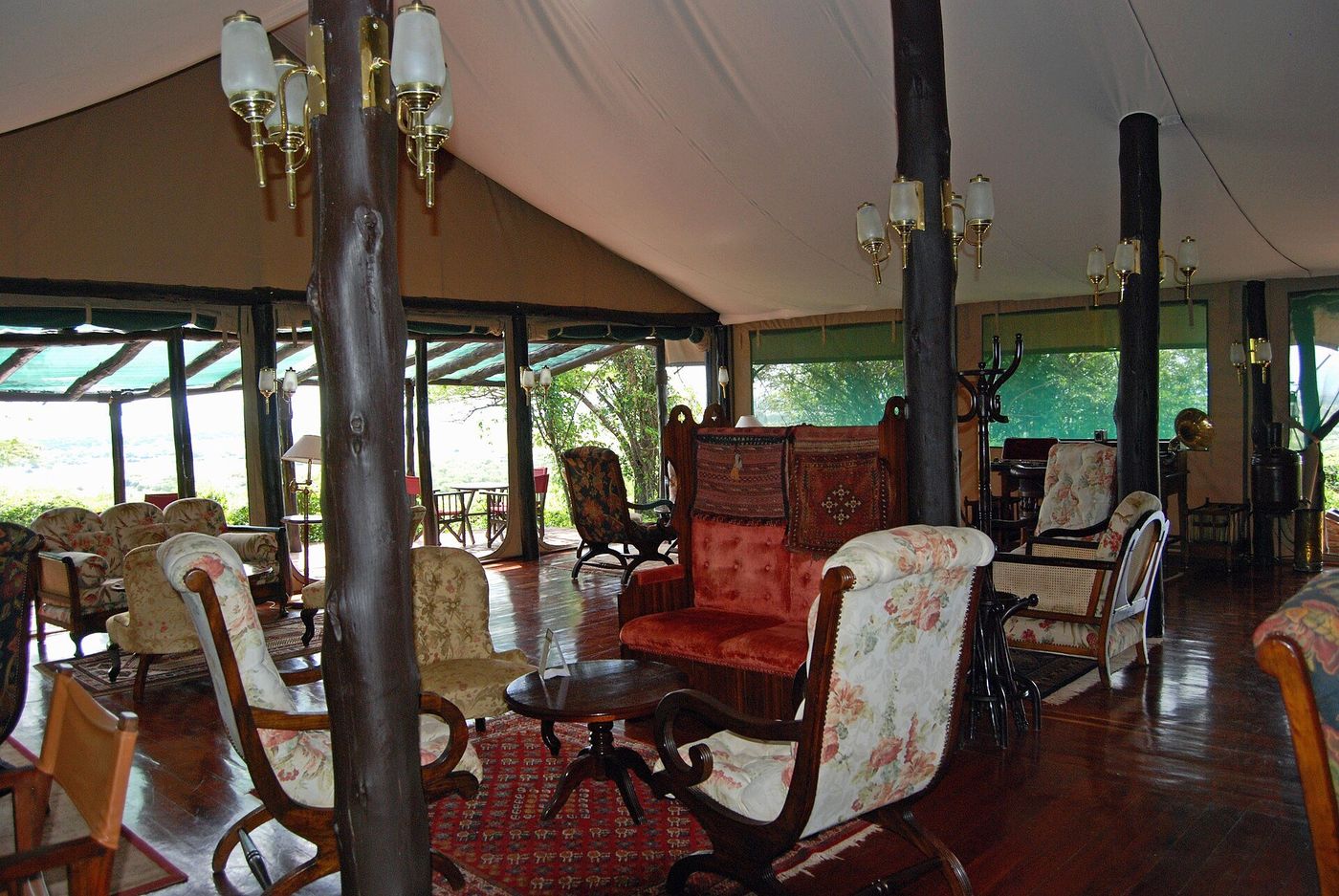
Described by standard, not by name: we do not name a property we have no agreement with. Your written proposal names the actual place, and the photographs here are examples of the standard rather than pictures of it. Power, water, wifi and access for each standard.
- No photograph on fileLodgeTwin, double and family rooms. Ground-floor rooms available at most.
-
Day2 The Momella Lakes WhereArusha National Park OvernightLodge or tented camp Meals BLD
The lake circuit is the most level walking in the park — flamingo, waterbuck, giraffe and usually buffalo at a distance. With an armed ranger throughout, which is a park requirement and not a flourish. Distance set yesterday.
Where you would sleep this night
Described by standard, not by name: we do not name a property we have no agreement with. Your written proposal names the actual place, and the photographs here are examples of the standard rather than pictures of it. Power, water, wifi and access for each standard.
- No photograph on fileLodgeTwin, double and family rooms. Ground-floor rooms available at most.
-
Day3 Forest and the lower slopes WhereArusha National Park OvernightLodge or tented camp Meals BLD
Into the forest, which is where the colobus are, on a route chosen to match what the assessment found. This can be two kilometres or ten. There is no prize for the longer one.
Where you would sleep this night
Described by standard, not by name: we do not name a property we have no agreement with. Your written proposal names the actual place, and the photographs here are examples of the standard rather than pictures of it. Power, water, wifi and access for each standard.
- No photograph on fileLodgeTwin, double and family rooms. Ground-floor rooms available at most.
-
Day4 Home WhereArusha → Kilimanjaro Overnight— Meals B
About an hour and a half to the airport, met and assisted through.

The places this journey goes
One photograph for each place on the route, in the order you reach them.
These are licensed photographs of the places themselves, credited on our photography credits page. They are not photographs of a Montero departure, vehicle or camp — we have not run this journey yet, and a gallery that implied otherwise would be worth nothing to you.
Where you would stay
Open any of these for rooms, power hours, hot water, Wi-Fi and the honest access position.
What it costs
Indicative $4,200 – $7,000 per person sharing, by season and standard. No price on this site has been approved, and nothing here is a quotation.
| Season | 1 | 2 | 3–4 | 5–6 | 7+ |
|---|---|---|---|---|---|
| PeakJuly – October, 20 Dec – 3 Jan | On request | On request | On request | On request | On request |
| ShoulderJanuary – February, June | On request | $4,200indicative | On request | On request | On request |
| GreenMarch – May, November | On request | On request | On request | On request | On request |
Per person sharing, US dollars, two people unless stated. Excludes international flights. A single traveller pays more and a larger group pays less per head — we will tell you how much before you ask twice. No figure here has been approved: see what it costs.
What moves the price: season, how many of you there are, whether you fly or drive the long sectors, and the standard of camp. A single traveller pays more; we will say how much before you ask twice.
Access and comfort
Each line is either confirmed by our own measurement or it is not. “On request” means we will plan and cost it and nobody has measured it yet.
| Provision | Status | Detail |
|---|---|---|
| Walking routes | Partial | Set by the assessment, which is the honest version. Some routes are level and compacted; most of the forest is neither. |
| Adaptive equipment | On request | Trekking chairs and similar can be sourced. Nothing is held in stock and nothing is confirmed until it is. |
| Step-free rooms | Partial | Ground-floor rooms are available at the park-edge lodges. Roll-in showers are not confirmed. |
| Hoist-fitted vehicle | On request | On request, from Moshi or Arusha. |
| Mount Meru summit | Not offered | Not offered. It is a four-day technical trek and we do not run it. |
We do not ask for a diagnosis — only for what you need. How we plan accessible journeys.
The detail
What is covered, what it involves on the ground, and the changes people most often ask for. Open whichever you need.
What is included, and what is not
Included
Private 4×4 safari vehicle with a pop-up roof and a professional English-speaking driver-guide, for your party alone
Accommodation as described, on a full-board basis
All park, conservation and concession fees
Airport and airstrip transfers, met at the aircraft rather than at the kerb
Bottled drinking water in the vehicle
24-hour local support while you are in the country
The individual assessment on day one
Armed ranger fees for every walk, which are a park requirement
Walking poles and a day pack, if you want them
Not included
Specialist adaptive equipment, which we would source and quote separately
The Mount Meru summit route, which we do not run
International flights, visas and travel insurance
Tips, premium drinks and personal expenses
Optional activities such as a balloon flight, unless listed above
Emergency medical evacuation cover — strongly recommended, and not something we currently provide
Practical detail
| The assessment | An hour on day one, with your guide, on known ground. It is not a medical examination and we will not ask for a diagnosis. We ask what works and what does not. |
|---|---|
| Armed rangers | A Tanzania National Parks requirement for all walking in the park, with rules on group size and distance from animals. Included in the price. |
| Never guaranteed accessible | Guide section 10 is explicit about this journey: individually assessed, and never described as guaranteed accessible. We hold to that even when asked. |
| Altitude | The walking stays between about 1,500 and 2,000 m. Not high enough to cause altitude illness. |
| Buffalo | Arusha National Park has a lot of them and they are the reason for the ranger. Walks are routed around them, sometimes at short notice. |
Ways to personalise this journey
The changes people actually ask for, with what each one does to the shape of the trip. Prices for these are quoted in your proposal, not here.
This itinerary is a draft. It is written to real logistics but has not yet been checked by a guide who works this circuit, and no price here has been approved. Treat every figure as indicative until we confirm it in writing.
Questions about this journey
What does the assessment involve?
A conversation and usually a short walk. What distance is comfortable, what gradient, what surfaces, how long you can be out, what you need to sit on and how often. No diagnosis, no medical form, no doctor’s letter.
What if the assessment says the walking will not work?
Then we rebuild the days as vehicle-based with short walks, and we do not charge you for the difference in our planning time. That outcome is not a failure of the journey; it is the journey doing its job.
Can I climb Mount Meru?
Not with us. It is a four-day trek to 4,562 m with a summit night, and we do not operate it. We can tell you what to ask an operator who does.
Is a trekking chair available?
It can be sourced, and it is not held in stock in Tanzania as far as we know. Ask early — this is weeks of lead time, not days.
If this one is not quite it
Journeys that share a region or a style with this one, and the background reading for the places on the route.

Tell us what you have in mind.
One conversation with the person who would plan it, and an honest answer about whether we are the right company for the trip.
Free, and with no obligation. A real planner replies within 24 business hours, East Africa Time. No payment is taken to enquire.