


Active
Great Rift Valley Eco & Active Biking Safari
Guided cycling through the banana plantations and irrigation furrows of Mto wa Mbu, canoeing on Lake Manyara when the water allows it, and classic game drives either side. For people who would rather not spend six days sitting down.
About this journey
Guided cycling through the banana plantations and irrigation furrows of Mto wa Mbu, canoeing on Lake Manyara when the water allows it, and classic game drives either side. For people who would rather not spend six days sitting down.
Best months. June to October and January to February. The long rains make the tracks unrideable and the canoeing unreliable.
Pace. Active. Cycling is on graded dirt and is as hard as you make it.
Who this journey suits
Sitting in a vehicle for six days sounds like the worst part of a safari.
You ride at home, or you are happy on a bike for two hours.
You want to meet people rather than pass them at forty kilometres an hour.
You want wildlife too, and the crater is non-negotiable.
Highlights
- Cycling through Mto wa Mbu's irrigation furrows, banana shambas and rice paddies
- A village that is genuinely multi-ethnic — over a hundred groups in one place
- Canoeing on Lake Manyara when the water level allows, among hippo and birds
- A full day in the Ngorongoro crater
- Escarpment viewpoints over the Rift floor that vehicles drive straight past
Route
| Stop | Nights | Why |
|---|---|---|
| Mto wa Mbu | 2 nights | The village, the furrows and the bikes. |
| Karatu | 1 night | Highlands, on the way up. |
| Ngorongoro | 1 night | Rim, and the crater. |
| Tarangire | 1 night | Elephants, on the way back. |
How the journey flows
Every point below is a real place at its real coordinates. The coastline is simplified — this is a route diagram, not a survey map.
- Private 4×4
Boundaries and protected areas are OpenStreetMap data, stored with this site. The dashed line is the order of the route, not the road taken.
In order
- Kilimanjaro Airport (JRO)Arrive
- Mto wa MbuPrivate 4×4
- Lake ManyaraPrivate 4×4
- KaratuPrivate 4×4
- Ngorongoro CraterPrivate 4×4
- TarangirePrivate 4×4
- Kilimanjaro Airport (JRO)Private 4×4
Day by day
A starting point. Every day here can be moved, shortened or removed — open one to read what it holds.
-
Day1 Arrive and down into the Rift WhereMto wa Mbu OvernightEco-lodge Meals D
Met at Kilimanjaro and about three hours west, dropping down the escarpment into the Rift floor. Bike fitting in the evening.
Where you would sleep this night
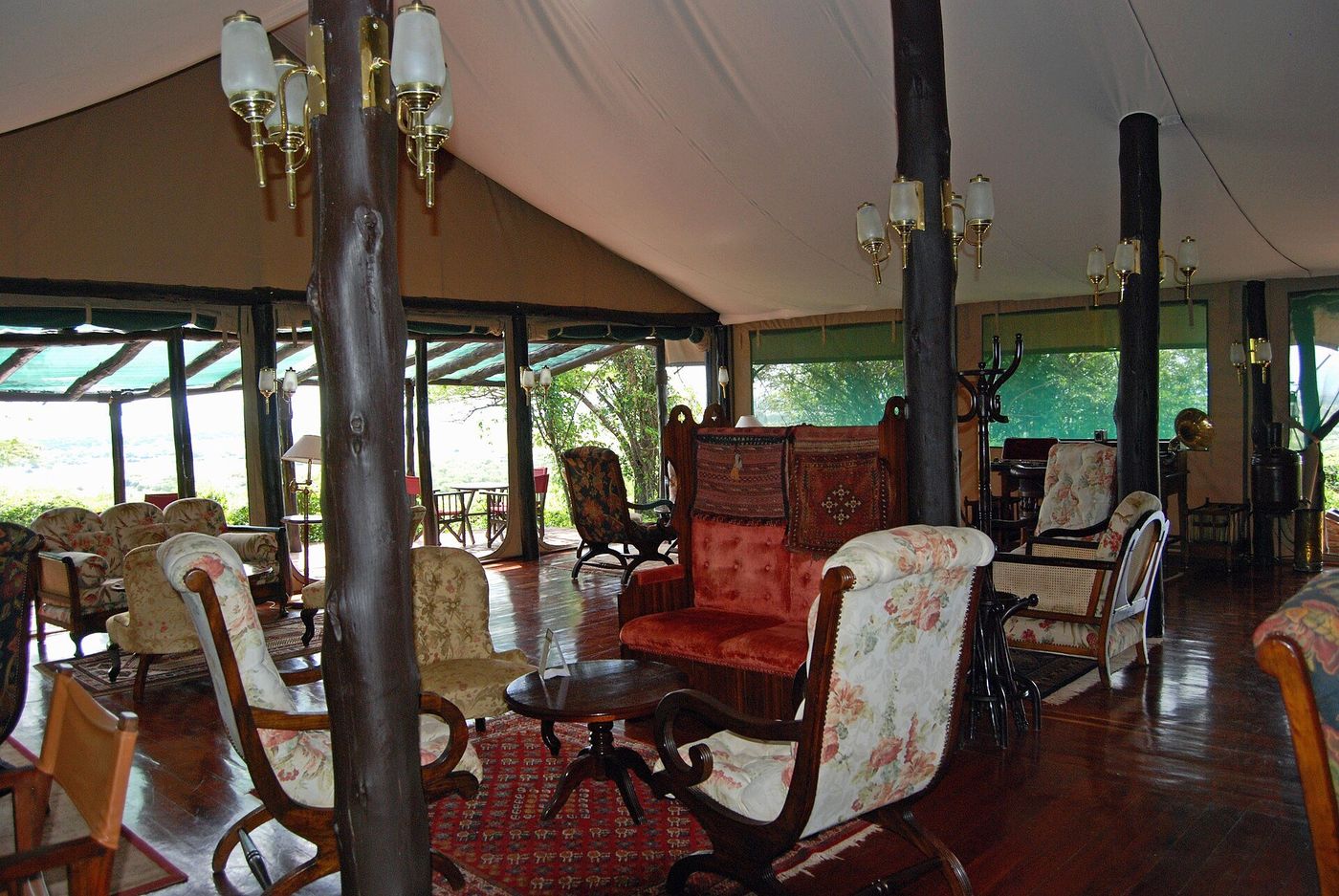
Described by standard, not by name: we do not name a property we have no agreement with. Your written proposal names the actual place, and the photographs here are examples of the standard rather than pictures of it. Power, water, wifi and access for each standard.

- No photograph on fileLodgeTwin, double and family rooms. Ground-floor rooms available at most.
-
Day2 The furrows and the shambas WhereMto wa Mbu OvernightEco-lodge Meals BLD
Three to four hours of easy cycling on flat dirt through banana plantations, rice paddies and the irrigation furrows that make the whole place work. Lunch with a family who farm here. Afternoon free or a second short ride.
Where you would sleep this night
Described by standard, not by name: we do not name a property we have no agreement with. Your written proposal names the actual place, and the photographs here are examples of the standard rather than pictures of it. Power, water, wifi and access for each standard.
- No photograph on fileLodgeTwin, double and family rooms. Ground-floor rooms available at most.
-
Day3 Canoes and the lake WhereKaratu OvernightFarmhouse lodge Meals BLD
Canoeing on Lake Manyara if the water level allows — it often does not, and we will say so rather than substitute silently. Then a game drive in the park and up to Karatu.
Where you would sleep this night
Described by standard, not by name: we do not name a property we have no agreement with. Your written proposal names the actual place, and the photographs here are examples of the standard rather than pictures of it. Power, water, wifi and access for each standard.
- No photograph on fileLodgeTwin, double and family rooms. Ground-floor rooms available at most.
-
Day4 The crater floor WhereNgorongoro OvernightRim lodge Meals BLD
Down at first light for a full day on the floor. No cycling here: it is not permitted and nor should it be.
Where you would sleep this night
Described by standard, not by name: we do not name a property we have no agreement with. Your written proposal names the actual place, and the photographs here are examples of the standard rather than pictures of it. Power, water, wifi and access for each standard.
- No photograph on fileLodgeTwin, double and family rooms. Ground-floor rooms available at most.
-
Day5 South to Tarangire WhereTarangire OvernightTented camp Meals BLD
Down from the rim and about three hours south. Afternoon along the river.
Where you would sleep this night
Described by standard, not by name: we do not name a property we have no agreement with. Your written proposal names the actual place, and the photographs here are examples of the standard rather than pictures of it. Power, water, wifi and access for each standard.
- No photograph on fileLodgeTwin, double and family rooms. Ground-floor rooms available at most.
-
Day6 Home WhereTarangire → Kilimanjaro Overnight— Meals BL
A morning drive, then about three hours to the airport.


The places this journey goes
One photograph for each place on the route, in the order you reach them.
These are licensed photographs of the places themselves, credited on our photography credits page. They are not photographs of a Montero departure, vehicle or camp — we have not run this journey yet, and a gallery that implied otherwise would be worth nothing to you.
Where you would stay
Open any of these for rooms, power hours, hot water, Wi-Fi and the honest access position.
What it costs
Price on request — quoted on your dates and standard. No price on this site has been approved, and nothing here is a quotation.
No price is published for this journey. It is quoted on your dates, the size of your party, how much of it you fly, and the standard of camp — and those four move the figure by a very large margin. Rather than print a range nobody has stood behind, we will build you a written, itemised quotation. It is free, and it is not a booking.
All quotations are per person sharing, in US dollars, and exclude international flights. A single traveller pays more and a larger group pays less per head. See what it costs for where the money actually goes.
What moves the price: season, how many of you there are, whether you fly or drive the long sectors, and the standard of camp. A single traveller pays more; we will say how much before you ask twice.
Access and comfort
Each line is either confirmed by our own measurement or it is not. “On request” means we will plan and cost it and nobody has measured it yet.
| Provision | Status | Detail |
|---|---|---|
| Cycling | Not offered | Standard bicycles on dirt. We have no adapted or hand-cycle provision and will not pretend otherwise. |
| Hand-cycle or adapted bike | On request | We would try to source one and we are not confident of succeeding. Ask early. |
| Canoeing | Partial | Boarding from a bank, with a step down and an unstable platform. |
| The rest of the journey | Partial | Game drives, the crater and the transfers are all seated and are the majority of the days. |
| Step-free rooms | On request | Available at some properties on this route; none confirmed. |
We do not ask for a diagnosis — only for what you need. How we plan accessible journeys.
The detail
What is covered, what it involves on the ground, and the changes people most often ask for. Open whichever you need.
What is included, and what is not
Included
Private 4×4 safari vehicle with a pop-up roof and a professional English-speaking driver-guide, for your party alone
Accommodation as described, on a full-board basis
All park, conservation and concession fees
Airport and airstrip transfers, met at the aircraft rather than at the kerb
Bottled drinking water in the vehicle
24-hour local support while you are in the country
Bicycles, helmets and a support vehicle on every ride
A local cycling guide
Canoeing on Lake Manyara, water level permitting
Ngorongoro Crater descent permit
Not included
Your own pedals, saddle or shoes if you prefer to bring them
International flights, visas and travel insurance
Tips, premium drinks and personal expenses
Optional activities such as a balloon flight, unless listed above
Emergency medical evacuation cover — strongly recommended, and not something we currently provide
Practical detail
| Fitness | Rides are three to four hours on flat or gently rolling dirt. There is a support vehicle and getting into it is not a failure. |
|---|---|
| Bikes | Hardtail mountain bikes, maintained locally. If you are particular, bring your own saddle and pedals. |
| Canoeing | Entirely dependent on the lake level, which has been unreliable for several years. We will tell you the position before you pay. |
| Heat and dust | The Rift floor is hot. Rides are in the morning for that reason. |
| Price | Not set. Quoted on your dates and standard. |
Ways to personalise this journey
The changes people actually ask for, with what each one does to the shape of the trip. Prices for these are quoted in your proposal, not here.
This itinerary is a draft. It is written to real logistics but has not yet been checked by a guide who works this circuit, and no price here has been approved. Treat every figure as indicative until we confirm it in writing.
Questions about this journey
How hard is the cycling?
Easy to moderate. Flat dirt tracks, three to four hours, with a support vehicle alongside. It is not a mountain-biking holiday.
What if the canoeing is off?
It often is. We substitute a walking safari or a second ride and we tell you the position before you travel rather than on the morning.
Is Mto wa Mbu a tourist village?
It is a real town of some tens of thousands of people that also receives visitors. The cycling takes you through working farmland rather than a craft market.
If this one is not quite it
Journeys that share a region or a style with this one, and the background reading for the places on the route.

Tell us what you have in mind.
One conversation with the person who would plan it, and an honest answer about whether we are the right company for the trip.
Free, and with no obligation. A real planner replies within 24 business hours, East Africa Time. No payment is taken to enquire.