


Culture
Indigenous Tribes & Cultural Heritage Odyssey
Eight days given to people rather than only to animals: a morning out with Hadzabe hunters, Datoga blacksmiths at the forge, a Maasai homestead, then the Serengeti. Every visit on terms the community sets, at a fee published to you.
About this journey
Eight days given to people rather than only to animals: a morning out with Hadzabe hunters, Datoga blacksmiths at the forge, a Maasai homestead, and then the Serengeti. Every visit on terms the community sets, at a fee published to you.
Best months. June to October. The Eyasi road is poor and in the rains it can be impassable.
Pace. Moderate. Early mornings, uneven ground, and some walking.
Who this journey suits
You are interested in how people live now, not in a performance of how they used to.
You can accept being told no — to a photograph, a visit, a question.
You would rather pay a published fee than negotiate at somebody’s door.
You want wildlife too, and would rather not choose.
Highlights
- A morning out with Hadzabe hunters, on their schedule rather than yours
- Datoga metalworking, where the arrowheads for that hunt are actually made
- A Maasai homestead visit arranged through the family, at an agreed fee
- Iraqw farming terraces in the Karatu highlands
- Three nights in the Serengeti at the end, so the journey is not only cultural
Route
| Stop | Nights | Why |
|---|---|---|
| Karatu | 1 night | Highland farming country and the Iraqw terraces. |
| Lake Eyasi | 2 nights | Hadzabe and Datoga, on their ground. |
| Ngorongoro | 1 night | Rim, and the crater floor. |
| Serengeti | 3 nights | One camp, three nights, no moving. |
How the journey flows
Every point below is a real place at its real coordinates. The coastline is simplified — this is a route diagram, not a survey map.
- Light aircraft
- Private 4×4
Boundaries and protected areas are OpenStreetMap data, stored with this site. The dashed line is the order of the route, not the road taken.
In order
- Kilimanjaro Airport (JRO)Arrive
- KaratuPrivate 4×4
- Lake EyasiPrivate 4×4
- Ngorongoro CraterPrivate 4×4
- SerengetiPrivate 4×4
- Kilimanjaro Airport (JRO)Light aircraft
Day by day
A starting point. Every day here can be moved, shortened or removed — open one to read what it holds.
-
Day1 Arrive and up to Karatu WhereKaratu OvernightFarm guesthouse Meals D
Met at Kilimanjaro, about four hours west. Karatu is highland farming country at 1,500 m, green and cool and nothing like the Tanzania of the photographs.
-
Day2 Terraces and smallholdings WhereLake Eyasi OvernightTented camp Meals BLD
A morning on the Iraqw terraces and the irrigation that makes them work, then down the escarpment to Eyasi — about two hours on a poor road. Your written conduct and photography brief gets walked through before any visit.
Where you would sleep this night
Described by standard, not by name: we do not name a property we have no agreement with. Your written proposal names the actual place, and the photographs here are examples of the standard rather than pictures of it. Power, water, wifi and access for each standard.
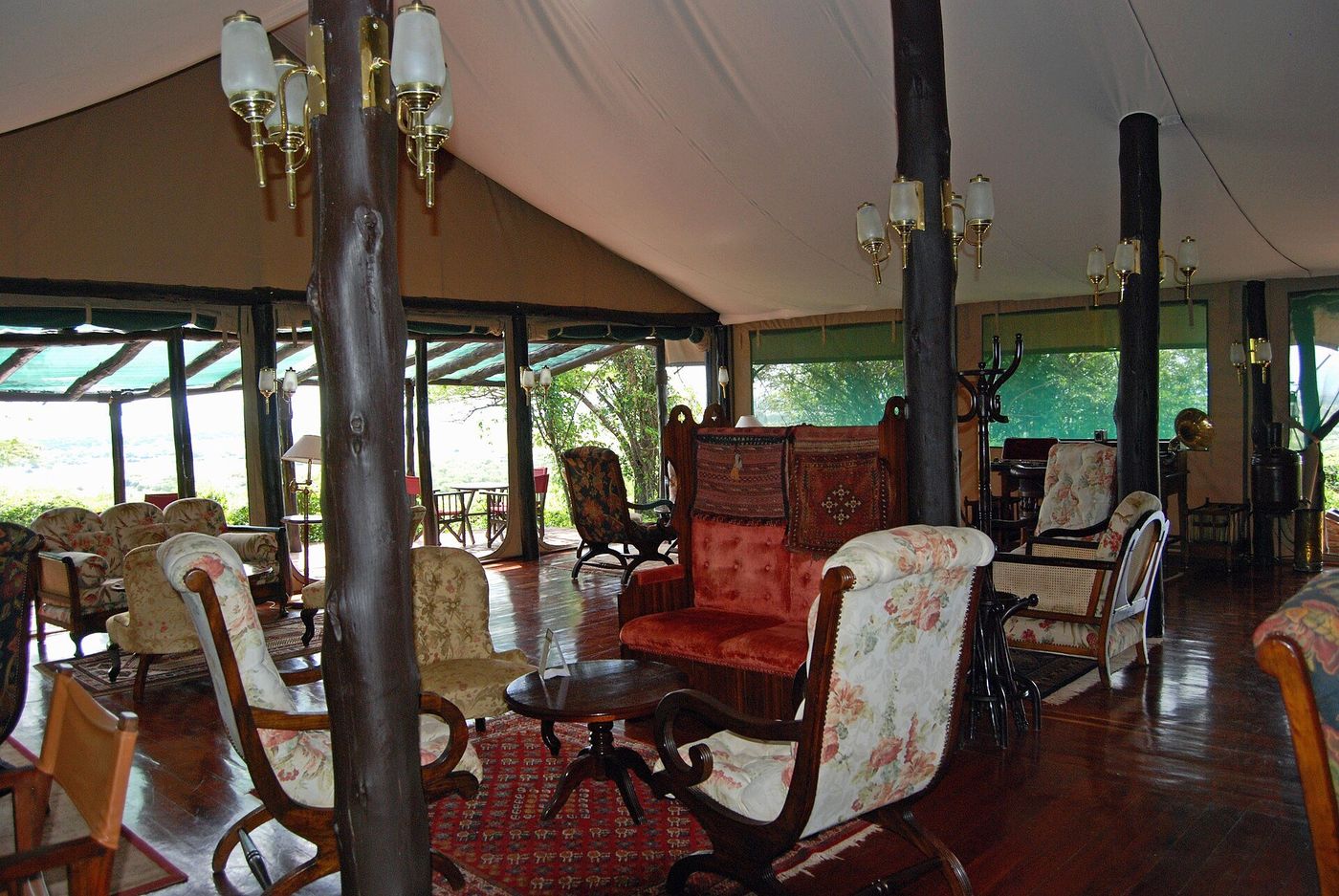
- No photograph on fileLodgeTwin, double and family rooms. Ground-floor rooms available at most.
-
Day3 Hadzabe and Datoga WhereLake Eyasi OvernightTented camp Meals BLD
Out before dawn with Hadzabe hunters, because that is when they hunt and not because it suits an itinerary. Later, the Datoga: pastoralists and blacksmiths who make the arrowheads from scrap metal at a bellows forge.
Where you would sleep this night
Described by standard, not by name: we do not name a property we have no agreement with. Your written proposal names the actual place, and the photographs here are examples of the standard rather than pictures of it. Power, water, wifi and access for each standard.
- No photograph on fileLodgeTwin, double and family rooms. Ground-floor rooms available at most.
-
Day4 Eyasi, and east WhereNgorongoro OvernightRim lodge Meals BLD
A second, slower morning at Eyasi if the community is willing, then up to the Ngorongoro rim, three to four hours.
Where you would sleep this night
Described by standard, not by name: we do not name a property we have no agreement with. Your written proposal names the actual place, and the photographs here are examples of the standard rather than pictures of it. Power, water, wifi and access for each standard.
- No photograph on fileLodgeTwin, double and family rooms. Ground-floor rooms available at most.
-
Day5 The crater floor, then north WhereSerengeti OvernightTented camp Meals BLD
Down at first light for the floor, up by late morning, then across the highlands and down onto the plains. A long day and a spectacular one.
Where you would sleep this night
Described by standard, not by name: we do not name a property we have no agreement with. Your written proposal names the actual place, and the photographs here are examples of the standard rather than pictures of it. Power, water, wifi and access for each standard.
- No photograph on fileLodgeTwin, double and family rooms. Ground-floor rooms available at most.
-
Day6 Serengeti, all day WhereSerengeti OvernightTented camp Meals BLD
Out early, back for the heat, out again at four.
Where you would sleep this night
Described by standard, not by name: we do not name a property we have no agreement with. Your written proposal names the actual place, and the photographs here are examples of the standard rather than pictures of it. Power, water, wifi and access for each standard.
- No photograph on fileLodgeTwin, double and family rooms. Ground-floor rooms available at most.
-
Day7 Serengeti, all day WhereSerengeti OvernightTented camp Meals BLD
A second full day from the same camp. A Maasai homestead visit on the park boundary is possible this afternoon, arranged through the family in advance.
Where you would sleep this night
Described by standard, not by name: we do not name a property we have no agreement with. Your written proposal names the actual place, and the photographs here are examples of the standard rather than pictures of it. Power, water, wifi and access for each standard.
- No photograph on fileLodgeTwin, double and family rooms. Ground-floor rooms available at most.
-
Day8 Home WhereSerengeti → Kilimanjaro Overnight— Meals B
Light aircraft out from the nearest strip, about an hour and a half.


The places this journey goes
One photograph for each place on the route, in the order you reach them.
These are licensed photographs of the places themselves, credited on our photography credits page. They are not photographs of a Montero departure, vehicle or camp — we have not run this journey yet, and a gallery that implied otherwise would be worth nothing to you.
Where you would stay
Open any of these for rooms, power hours, hot water, Wi-Fi and the honest access position.
The cultural part, in detail
On terms the community sets, at a fee published to you, with the right to say no.
- Who
- Hadzabe and Datoga at Lake Eyasi, a Maasai homestead on the Serengeti boundary, and Iraqw farmers in the highlands.
- Where
- Karatu, Lake Eyasi and the Ngorongoro Conservation Area.
- What you do
- A hunting morning accompanied rather than joined; blacksmithing at the forge; a homestead visit arranged through the family rather than through a gate fee.
- Guides
- A local translator at every visit. The Maasai homestead is arranged directly with the family, who set the terms.
- Why it matters
- Eight days that treat people as people rather than as scenery between game drives.
What we will not do
| Photography on demand | The rules are the community’s, issued to you in writing before you travel, and they are not suggestions. Usually: ask every time, never photograph children without a parent present, and accept no for an answer. |
|---|---|
| A guaranteed visit | A community can decline on the day, and sometimes does. That is the arrangement working rather than failing. We move the day or refund that element. |
| Staged ceremonies | We do not commission dances, dress or rituals for visitors. If you are hoping for a costume, this is not the journey, and we would rather you knew now. |
| An ethical guarantee | We can tell you our terms: set by the community, fee published to you with the recipient named, their photography rules, their right to refuse. We cannot tell you the wider industry around Lake Eyasi is clean, because it is not. |
What it costs
Price on request — community fees are itemised separately. No price on this site has been approved, and nothing here is a quotation.
No price is published for this journey. It is quoted on your dates, the size of your party, how much of it you fly, and the standard of camp — and those four move the figure by a very large margin. Rather than print a range nobody has stood behind, we will build you a written, itemised quotation. It is free, and it is not a booking.
All quotations are per person sharing, in US dollars, and exclude international flights. A single traveller pays more and a larger group pays less per head. See what it costs for where the money actually goes.
What moves the price: season, how many of you there are, whether you fly or drive the long sectors, and the standard of camp. A single traveller pays more; we will say how much before you ask twice.
Access and comfort
Each line is either confirmed by our own measurement or it is not. “On request” means we will plan and cost it and nobody has measured it yet.
| Provision | Status | Detail |
|---|---|---|
| Step-free camps at Eyasi | Not offered | We know of none we could confirm. The infrastructure is very basic. |
| Seated participation | Partial | Much of the Datoga and Maasai time can be done seated. A Hadzabe morning involves walking on rough ground and cannot be. |
| Hoist-fitted vehicle | On request | On request. The Eyasi road is hard on any vehicle and we would discuss it honestly. |
| Shorter days | On request | Easily arranged. It is the driving, not the visits, that makes this journey tiring. |
| Crater floor toilets | Partial | Two points with grab rails. Neither is roll-in. |
We do not ask for a diagnosis — only for what you need. How we plan accessible journeys.
The detail
What is covered, what it involves on the ground, and the changes people most often ask for. Open whichever you need.
What is included, and what is not
Included
Private 4×4 safari vehicle with a pop-up roof and a professional English-speaking driver-guide, for your party alone
Accommodation as described, on a full-board basis
All park, conservation and concession fees
Airport and airstrip transfers, met at the aircraft rather than at the kerb
Bottled drinking water in the vehicle
24-hour local support while you are in the country
All community fees, itemised in your proposal with the recipient named
A local translator at every community visit
The written photography and conduct brief, issued before you travel
Light-aircraft sector out of the Serengeti
Not included
Crafts and goods bought directly from community members
Additional photography fees where a community charges separately
International flights, visas and travel insurance
Tips, premium drinks and personal expenses
Optional activities such as a balloon flight, unless listed above
Emergency medical evacuation cover — strongly recommended, and not something we currently provide
Practical detail
| Consent and conduct | Written rules, agreed with the communities, issued before you travel: what may be photographed, what may not, what to ask and what not to. They are not suggestions. |
|---|---|
| The hunt | You accompany; you do not participate. The Hadzabe hunt for food and a group of visitors makes that harder, which is why the group is small and the morning is short. |
| Naming peoples correctly | Hadzabe, Datoga, Iraqw, Maasai. Not “tribes”, and not a costume. |
| A community may decline | Sometimes a community does not want visitors that week. That is the arrangement working. We move the day or refund that element. |
| Price | Not set. Community fees are quoted as separate lines so you can see them. |
Ways to personalise this journey
The changes people actually ask for, with what each one does to the shape of the trip. Prices for these are quoted in your proposal, not here.
This itinerary is a draft. It is written to real logistics but has not yet been checked by a guide who works this circuit, and no price here has been approved. Treat every figure as indicative until we confirm it in writing.
Questions about this journey
Is this not exploitative?
Some versions of it plainly are. What we control is that the terms are the community’s, the fee is agreed and published to you, the photography rules are theirs, and they can decline on the day without us pressing. What we do not control is the wider industry around Eyasi, which has a poor reputation for a reason.
Will people be in traditional dress?
They will be wearing what they are wearing. If you are hoping for a costume, this is not the journey.
How much of the fee reaches the community?
The community fee is itemised in your proposal with the recipient named.
If this one is not quite it
Journeys that share a region or a style with this one, and the background reading for the places on the route.

Tell us what you have in mind.
One conversation with the person who would plan it, and an honest answer about whether we are the right company for the trip.
Free, and with no obligation. A real planner replies within 24 business hours, East Africa Time. No payment is taken to enquire.